Why bad mothers are better for the economy
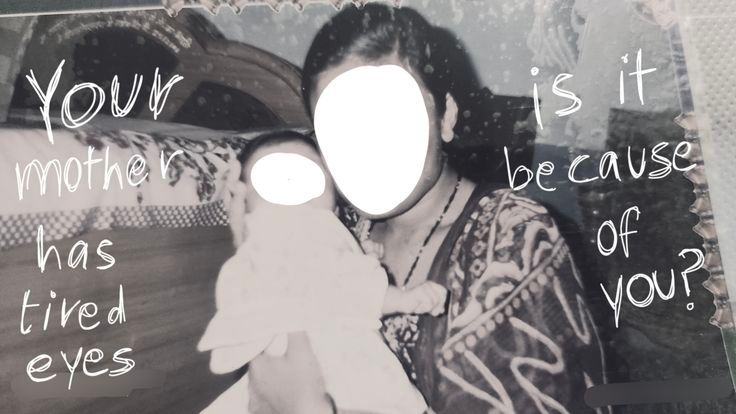
Bad mothers? That adjective doesn’t even belong there. And yet, every country would be better off with a few more of them. By “bad mother,” I don’t mean someone who is abusive or neglectful.
So who exactly is a “bad” mother? Before we answer that, let’s picture a bad father. An absent father. A short-tempered father. A distant father. Didn’t that sound more normal? Not exactly acceptable, but believable. We’ve seen him in films, books and television for decades. He’s emotionally unavailable, works too much, has anger issues, struggles to communicate. He’s flawed because he’s human.
I remember growing up and noticing how many of my friends were completely comfortable around their mothers but almost intimidated by their fathers. Nobody found that particularly strange. It was simply how families were. Men weren’t expected to be emotionally available. Their responsibility was to earn money, pay the bills, keep the children in line. If they were affectionate, patient and deeply involved parents, they were celebrated as exceptional.
Does a “bad mother” even make sense to you? Is she very often depicted in media? Is she explained well? The psyche behind a “bad” mom. I think in our society, a “bad mother” is someone who refuses to cook food for her family herself even though she knows how to. She's deemed to be bad when she comes back late from work and doesn't immediately begin serving her husband and his family. In some households, she's considered immoral simply for choosing to continue her career after marriage. She’s someone who raises her opinions when it comes to finances or any sort of final say in the house. She openly resents the relatives who wronged her ten years ago instead of quietly forgiving them. She is harsh on her children because she desperately wants them to do better than she ever did. She doesn’t stay quiet during disagreements. She argues back. Loudly, if she has to. She takes pride in having house help and feels no guilt about using it. She is always tired, often angry, and rarely smiles just to make other people comfortable. She manages the finances. Grown adults are intimidated by her. Her children wonder why she isn’t like the other mothers who always seem so sweet, innocent, quiet and endlessly helpful.
Let’s ignore the double standards for now. I want to talk about something else.
Why is silence, brainwashed obedience and stunted intellect still so romanticised when it comes to women? Why is it still the norm?
Every nation wants to prosper. It wants a healthier economy, a more educated workforce, better leaders, more innovation and stronger institutions. But a nation can only ever be as strong as its people. All of its people. Women make up roughly half of every nation’s population. Yet they are still unsafe, overlooked, ridiculed at every opportunity, and often trapped by traditions they never chose. They may have the legal right to work, but they’re still expected to carry the invisible burden of motherhood, caregiving, cooking, emotional regulation and household management. Imagine what happens when half the population is encouraged not just to study, but to think freely, to lead, to innovate, to build businesses, to shape policy and to make decisions without constantly having to justify their ambition. Imagine if they were met with encouragement instead of judgement, with opportunity instead of suspicion. That isn’t just good for women. It’s good for the nation itself.
History has shown us what happens when nations make different choices. And this reminds me of David Oks’ essay Why China Got Rich and India Didn’t. His central argument is that countries become wealthy not merely through good economic policy, but by investing in human capital: healthy, educated, capable people.
One comparison from the essay stayed with me. Before Mao, China was hardly a model of gender equality. It was deeply traditional and patriarchal. But after the Communist Revolution, the Chinese state forcibly dismantled many of those social structures. Women gained legal rights over marriage, divorce and property, millions entered the workforce, and mass campaigns expanded education and healthcare. None of this came peacefully. It happened alongside authoritarian rule, political repression, famine and unimaginable human suffering. I am not defending the methods. But I think it is impossible to ignore one consequence: China fundamentally altered the social position of women decades before its economic boom.
India’s story was almost the opposite. Independence brought democracy rather than revolution. Reform had to pass through debate, compromise and public acceptance. For example, in 1950, Jawaharlal Nehru and B. R. Ambedkar introduced the Hindu Code Bill, proposing reforms that would have expanded women’s rights in marriage, divorce and inheritance. It met fierce resistance. Hindu traditionalists argued it would “disrupt” the Indian family, and much of the bill was either diluted or abandoned. Many later reforms existed largely on paper while customs remained stronger than the law. Dowry continued despite being outlawed. Women’s inheritance rights were routinely denied. Patriarchal families, not legislation, continued to determine women’s lives.
In India, democratic reforms were attempted, but many social reforms stalled or remained weakly enforced. Patriarchal family structures largely survived. Women remained excluded from education, property and work on a much larger scale. The result wasn’t just social inequality. It was the underdevelopment of half the country’s human capital.
That difference matters economically. China entered the late twentieth century with hundreds of millions more educated, healthier and economically active women. India entered it with millions of women whose education, mobility and financial independence were still constrained by patriarchal expectations. We often describe this as a social issue but it was also an economic decision.
Coming back to our society’s idea of a “bad mother.” She is a peculiar woman because she is knowingly or unknowingly living against the norm. But if she persists in living that way, the people around her slowly begin to accept it as normal. What once seemed rebellious becomes ordinary. Her children, her relatives, her neighbours and her friends are influenced by it, and in turn influence others. That is how societies change. They grow up seeing a woman who speaks her mind, earns her own money, refuses to compromise simply because she is expected to, and lives as a full individual rather than just somebody’s wife or somebody’s mother. Her children, regardless of their gender, learn to respect a woman’s choice not to behave in the narrow, “expected” ways society has prescribed for her. They carry that understanding into their own relationships, workplaces and families. She is good not only for her family, but for the social and economic development of a nation.
Yes, it might mean that her husband and children have to do their own laundry, cook when they’re hungry, take care of themselves when they’re sick and become more independent. They might have to learn that care is not something women naturally owe them. But wait, shouldn’t everyone know this anyway?
As kids we’ve been told so many elaborate stories about strength and resilience. But children who grow up with a “bad mother” don’t just hear those stories, they live with one. She is the living, breathing story of strength and resilience. Something as ordinary as wearing short clothes or bold make-up in public carries a story of how she had to fight so many people to get the freedom she has today. The idea of “innocent mothers” has been so glorified that you might have even cringed at the last sentence.
A nation that discourages women from becoming fully autonomous people is deliberately wasting half of its human capital.
When half the population is told to compromise, the nation is bound to never realise its full potential, thus forever remaining average. It’s time to appreciate the “bad mothers”. It's time we encourage financially independent, fully autonomous and opinionated women. It's time we offer them equal respect, kindness and grace. Its time to stop shaming “bad mothers”, because the woman we call a “bad mother” today is simply the first woman in her family to live like a full citizen.